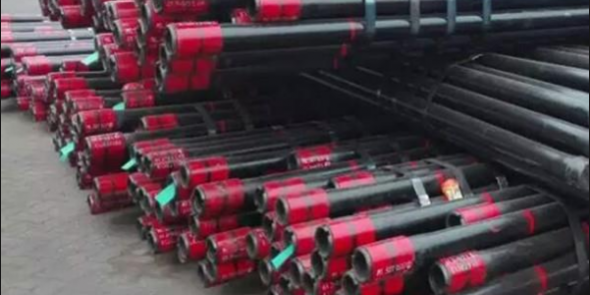
The Differences Between Oil Casing and Tubing: Practical Insights from a Field Engineer
I’ve been a field engineer in the oil and gas industry for 12 years—spent time in the Permian Basin, worked on shale wells in Sichuan Basin, even spent six months troubleshooting offshore casing failures in the Bohai Bay. If there’s one thing I’ve learned, it’s this: mixing up casing and tubing isn’t just a rookie mistake. It’s a costly one. I’ve seen a crew misrun tubing instead of intermediate casing on a 10,000-foot well in West Texas; by the time we caught it, we’d wasted three days and over $120,000 in rig time. Another time, in Sichuan’s shale gas fields, a casing collapse due to wrong material selection led to a 2-week shutdown and environmental remediation costs north of $500,000. So let’s get this straight—casing and tubing are both steel tubulars, yes. But they’re not interchangeable. Not even close.
Most technical papers will hit you with dry definitions first. I’m not going to do that. Instead, I’ll break down what they do, how they’re built, why they fail, and how to fix that—all through the lens of someone who’s gotten his hands dirty with both. I’ll throw in real numbers, actual case studies from my own logbooks, and the formulas we use in the field to calculate strength and longevity. No fluff, no jargon for jargon’s sake. Just straight talk from a guy who’s had to fish casing out of a collapsed wellbore at 2 a.m. and replace corroded tubing in 110-degree heat.
First, let’s set the stage. The oil and gas industry runs on tubular goods—casing, tubing, drill pipe. But casing and tubing are the workhorses that stay in the well long after the drill rig packs up. Casing is the “skeleton” of the well; it holds the formation together, keeps contaminants out, and provides a stable pathway for drilling and production. Tubing is the “veins”; it carries oil, gas, and produced fluids from the reservoir to the surface, day in and day out, under extreme pressure and temperature. You can’t have a productive well without either. But understanding their differences is the key to avoiding failures, cutting costs, and keeping operations safe.
1. Core Definitions: Not Just “Steel Pipes”
Let’s start with the basics, but I’ll keep it practical. I’ve heard new engineers refer to casing as “big tubing” or tubing as “small casing”—don’t do that. It’s a mistake that leads to bad decisions. Here’s what each one actually is, based on what I’ve seen in the field.
1.1 Oil Casing: The Well’s Structural Backbone
Oil casing is a heavy-walled steel pipe run into the drilled wellbore and cemented in place. Its primary job? Structural integrity. When you drill a well, you’re creating a hole in the earth—one that’s surrounded by rock, sand, clay, and sometimes water-bearing formations. Without casing, that hole would collapse in hours, if not minutes. I’ve drilled shallow wells (less than 3,000 feet) where the formation was so loose, we had to run casing within 500 feet of the surface to keep it from caving in. Deep wells (15,000+ feet) face even bigger challenges—high formation pressure, extreme temperatures (up to 350°F in some Gulf of Mexico wells), and corrosive fluids like hydrogen sulfide (H₂S) and carbon dioxide (CO₂). Casing has to stand up to all of that, for decades.
But casing isn’t just one size fits all. We run casing in “strings”—layers that get smaller as the well gets deeper. Conductor casing is the first one down; it’s the largest (18–30 inches in diameter) and shortest (usually 100–300 feet), and it protects the shallow formations and supports the wellhead. Surface casing is next (13–18 inches), run to 1,000–5,000 feet, and it isolates freshwater aquifers—critical for environmental compliance. Intermediate casing (7–13 inches) goes deeper, isolating high-pressure zones that could cause blowouts during drilling. Production casing (4–7 inches) is the final string, run all the way to the reservoir, and it provides a barrier between the reservoir fluids and the other formations. Sometimes we use liner casing too—short sections of casing that don’t reach the surface, used to save cost in deep wells.
One thing I always emphasize to new crews: casing is permanent. Once it’s cemented in place, you can’t easily remove it. That’s why material selection and installation are so critical. I worked on a well in the Permian Basin in 2022 where the operator cut corners on intermediate casing—used a lower steel grade than required. Six months later, the casing failed due to high formation pressure, and we had to drill a sidetrack well, costing over $2 million. Don’t cut corners on casing. It’s not worth it.
1.2 Tubing: The Well’s Fluid Conduit
Tubing is a lighter-walled steel pipe run inside the production casing, after the well is completed. Unlike casing, it’s not cemented in place—it’s hung from the wellhead and can be pulled out, inspected, and replaced if needed. That’s a key difference right there: casing is permanent, tubing is replaceable. I’ve pulled tubing out of wells dozens of times—sometimes because it’s corroded, sometimes because it’s plugged with scale, sometimes just for routine inspection.
Tubing’s main job is to transport reservoir fluids (oil, gas, water) from the production zone to the surface. But it’s not as simple as “pipes carrying oil.” Tubing has to handle high internal pressure—sometimes up to 10,000 psi in high-pressure gas wells. It has to resist corrosion from produced fluids (H₂S, CO₂, brine) and erosion from sand and other solids carried in the fluid. And it has to be compatible with downhole equipment like packers, pumps, and valves. I’ve seen tubing fail because it wasn’t rated for the pressure, because it corroded through, or because sand eroded a hole in the wall. Each failure means lost production—sometimes for days.
Tubing also comes in different sizes and grades, but it’s always smaller than the casing it’s run inside. Common tubing sizes are 2-3/8 inches, 2-7/8 inches, and 3-1/2 inches—much smaller than production casing (which is usually 4-1/2 inches or larger). And unlike casing, tubing is often “upset” at the ends—thickened to handle the connection threads, which are critical for maintaining pressure integrity. I’ve had tubing connections leak because the threads weren’t properly dressed or torqued—another rookie mistake that’s easy to avoid with proper training.
2. Technical Differences: Material, Dimensions, and Performance
Now let’s get into the nitty-gritty—the technical details that separate casing from tubing. I’ll use tables, formulas, and real data from my field logs to make this concrete. These are the specs we use every day when selecting tubulars for a well. Ignore them, and you’ll have problems.
2.1 Material Selection: Steel Grades and Properties
Both casing and tubing are made from carbon steel or alloy steel, but the grades are different because they face different loads. The American Petroleum Institute (API) sets the standards for casing and tubing grades—API 5CT for casing and tubing, to be specific (9th edition, June 2011 is still the most widely used, though some operators are adopting newer revisions). But even within API 5CT, there are key differences in how we select grades for casing vs. tubing.
Casing needs high compressive strength (to resist collapse from formation pressure) and high tensile strength (to support its own weight and the weight of the cement). Tubing needs high internal pressure strength (to resist burst from reservoir pressure) and good corrosion resistance (since it’s in direct contact with produced fluids). Let’s break down the common grades and their properties.
|
API Grade
|
Yield Strength (psi)
|
Tensile Strength (psi)
|
Primary Use
|
Key Property
|
|---|---|---|---|---|
|
J55
|
55,000
|
95,000–110,000
|
Shallow casing (conductor, surface), low-pressure tubing
|
Low cost, good ductility
|
|
N80
|
80,000
|
110,000–130,000
|
Intermediate casing, medium-pressure tubing
|
Balanced strength and corrosion resistance
|
|
P110
|
110,000
|
135,000–150,000
|
Production casing, high-pressure tubing
|
High tensile/compressive strength, good for H₂S service
|
|
Q125
|
125,000
|
145,000–160,000
|
Deep/ultra-deep well casing, high-pressure gas tubing
|
Extreme strength, resistance to high temperatures
|
|
V150
|
150,000
|
170,000–185,000
|
Ultra-deep wells, sour gas wells
|
Highest strength, excellent H₂S corrosion resistance
|
From my experience, the most common mistake here is using N80 tubing in a high-pressure well that requires P110. I saw this happen in a Sichuan shale gas well in 2023—operator used N80 tubing to save cost. The well had a reservoir pressure of 8,500 psi, which exceeded the burst pressure of N80 tubing. After two weeks of production, the tubing burst, causing a gas leak. We had to shut down the well, pull the damaged tubing, and replace it with P110—costing $300,000 in lost production and repairs. Moral of the story: use the right grade for the job.
Another key material difference: corrosion-resistant alloys (CRAs). In wells with high H₂S or CO₂ content (sour wells), we use CRA casing and tubing—materials like 13Cr, 22Cr, or duplex stainless steel. I’ve worked on sour wells in the Middle East where the H₂S content was over 10% by volume; in those wells, using carbon steel casing would lead to sulfide stress cracking (SSC) within months. CRA tubing is more expensive, but it’s worth it to avoid failures. In 2024, I worked on a well in Oman where we used 22Cr duplex tubing—cost $20 per foot vs. $8 per foot for P110—but it’s been in service for 18 months with zero corrosion issues.
2.2 Dimensions: Diameter, Wall Thickness, and Weight
Casing is bigger, heavier, and thicker-walled than tubing. That’s a general rule, but let’s get into the specifics. The diameter of casing strings decreases as the well gets deeper—conductor casing is the largest, production casing is smaller, and tubing is smaller than production casing. Wall thickness is measured in inches or millimeters, and weight is measured in pounds per foot (lb/ft).
|
Tubular Type
|
Common Diameter (in)
|
Wall Thickness (in)
|
Weight (lb/ft)
|
Typical Length (ft)
|
|---|---|---|---|---|
|
Conductor Casing
|
18–30
|
0.500–1.000
|
80–250
|
100–300
|
|
Surface Casing
|
13–18
|
0.400–0.800
|
40–120
|
1,000–5,000
|
|
Intermediate Casing
|
7–13
|
0.350–0.700
|
20–80
|
5,000–10,000
|
|
Production Casing
|
4–7
|
0.300–0.600
|
15–50
|
10,000–18,000
|
|
Tubing
|
2-3/8–3-1/2
|
0.150–0.300
|
4–15
|
5,000–15,000
|
Let’s talk about wall thickness for a minute—this is critical for strength. Casing has a thicker wall because it has to resist external pressure (formation collapse) and internal pressure (from drilling fluids and cement). Tubing has a thinner wall because it only has to resist internal pressure (from produced fluids) and its own weight. The wall thickness also affects the burst pressure and collapse pressure—two key metrics we calculate before running any tubular.
Here are the formulas we use in the field to calculate burst pressure and collapse pressure. These aren’t just theoretical—we use them every time we select casing or tubing for a well.
Burst Pressure (Internal Pressure Capacity)
Burst pressure is the maximum internal pressure a tubular can withstand before it ruptures. For casing and tubing, we use the API burst pressure formula, which accounts for wall thickness, outer diameter, and yield strength:
$$P_{burst} = \frac{2 \times \sigma_y \times t}{D_o – 2t}$$
Where:
-
$$P_{burst}$$= Burst pressure (psi)
-
$$\sigma_y$$= Yield strength of the steel (psi)
-
$$t$$= Wall thickness (in)
-
$$D_o$$= Outer diameter (in)
Let’s plug in some numbers to make this real. Take a 4-1/2 inch P110 production casing with a wall thickness of 0.337 inches.
$$\sigma_y$$
= 110,000 psi; $$t$$
= 0.337 in; $$D_o$$
= 4.5 in$$P_{burst} = \frac{2 \times 110,000 \times 0.337}{4.5 – 2 \times 0.337} = \frac{74,140}{3.826} \approx 19,378 psi$$
Now take a 2-7/8 inch P110 tubing with a wall thickness of 0.190 inches:
$$\sigma_y$$
= 110,000 psi; $$t$$
= 0.190 in; $$D_o$$
= 2.875 in$$P_{burst} = \frac{2 \times 110,000 \times 0.190}{2.875 – 2 \times 0.190} = \frac{41,800}{2.495} \approx 16,753 psi$$
You can see that the casing has a higher burst pressure than the tubing, even though they’re the same grade. That’s because of the thicker wall and larger diameter. But tubing is still more than capable of handling most reservoir pressures—remember, the production casing is there to protect the tubing from external pressure, so the tubing only has to deal with internal pressure from the fluids.
Collapse Pressure (External Pressure Capacity)
Collapse pressure is the maximum external pressure a tubular can withstand before it collapses. This is far more important for casing than for tubing, because casing is exposed to external formation pressure. Tubing is inside the casing, so it’s protected from external pressure—unless the casing fails, which is rare if it’s properly installed.
The API collapse pressure formula is more complex, but here’s the simplified version we use in the field for thick-walled tubulars (casing):
$$P_{collapse} = \frac{2 \times \sigma_y \times (D_o^2 – D_i^2)}{D_o^2}$$
Where:
-
$$P_{collapse}$$= Collapse pressure (psi)
-
$$\sigma_y$$= Yield strength of the steel (psi)
-
$$D_o$$= Outer diameter (in)
-
$$D_i$$= Inner diameter (in) =$$D_o – 2t$$
Using the same 4-1/2 inch P110 casing as before (
$$D_o$$
= 4.5 in, $$t$$
= 0.337 in, $$D_i$$
= 3.826 in):$$P_{collapse} = \frac{2 \times 110,000 \times (4.5^2 – 3.826^2)}{4.5^2} = \frac{220,000 \times (20.25 – 14.64)}{20.25} = \frac{220,000 \times 5.61}{20.25} \approx 60,741 psi$$
That’s a huge collapse pressure—more than enough to handle even the highest formation pressures in deep wells. Tubing, on the other hand, has a much lower collapse pressure because of its thinner wall. Let’s calculate it for the 2-7/8 inch P110 tubing (
$$D_o$$
= 2.875 in, $$t$$
= 0.190 in, $$D_i$$
= 2.495 in):$$P_{collapse} = \frac{2 \times 110,000 \times (2.875^2 – 2.495^2)}{2.875^2} = \frac{220,000 \times (8.265 – 6.225)}{8.265} = \frac{220,000 \times 2.04}{8.265} \approx 54,325 psi$$
Wait, that’s still high. But remember, tubing is inside the casing, so it never sees that kind of external pressure. The casing takes the brunt of the formation pressure, so the tubing only has to worry about internal pressure. That’s why tubing can have a thinner wall—it doesn’t need the same collapse resistance as casing.
2.3 Connections: Threads and Couplings
Connections are another key difference between casing and tubing. Both use threaded connections to join lengths of pipe, but the type of thread and coupling is different because of their different uses.
Casing connections are designed for strength and cement retention. They’re usually “integral” (no separate coupling) or use a heavy coupling that’s welded or threaded onto the pipe. The most common casing threads are API Short Round Thread (SRT), API Long Round Thread (LRT), and API Buttress Thread (BT). Buttress threads are the most common in deep wells because they can handle high tensile loads and provide a good seal against cement. I’ve used buttress threads on every deep well I’ve worked on—they’re strong, reliable, and easy to make up (tighten) with the right equipment.
Tubing connections are designed for pressure tightness and easy make-up/break-out (since tubing is pulled and replaced regularly). They’re usually “upset” at the ends—thickened to handle the threads—and use a separate coupling. The most common tubing threads are API Non-Upset (NU) and API External Upset (EU). EU threads are thicker and stronger than NU threads, so they’re used in high-pressure wells. I prefer EU threads for most applications—they’re more durable and less likely to leak than NU threads.
Another difference: casing connections are often coated with thread compound to help with make-up and provide a seal against cement. Tubing connections are coated with thread grease to prevent galling (seizing) and provide a pressure-tight seal. I’ve seen connections leak because the wrong thread compound was used—using casing thread compound on tubing connections, or vice versa. It’s a small mistake, but it can lead to big problems.
3. Application Differences: When to Use Which
Now let’s talk about where and how we use casing and tubing in the well lifecycle. This is where the rubber meets the road—understanding their applications is the key to using them correctly.
3.1 Casing Applications: From Drilling to Abandonment
Casing is run during the drilling phase of the well, in stages, as the well gets deeper. Each casing string has a specific job, and they all work together to keep the well safe and stable.
Conductor Casing: The first string run, usually before the main drill rig arrives. It’s driven into the ground with a hammer or drilled, and it’s used to:
-
Protect the shallow soil and rock from drilling fluids
-
Support the wellhead and blowout preventer (BOP) during drilling
-
Prevent surface water from entering the wellbore
I’ve run conductor casing in some pretty rough terrain—deserts, swamps, offshore platforms. In the swamps of Louisiana, we had to use a floating rig to run conductor casing because the ground was too soft to support a land rig. It’s not glamorous work, but it’s critical.
Surface Casing: Run after the well is drilled to 1,000–5,000 feet. Its main job is to isolate freshwater aquifers—something that’s heavily regulated by environmental agencies. If surface casing isn’t properly cemented, drilling fluids or produced fluids can contaminate groundwater. I’ve worked on wells where we had to run extra surface casing because the freshwater aquifer was deeper than expected. It added cost, but it’s non-negotiable.
Intermediate Casing: Run after the well is drilled to 5,000–10,000 feet. It’s used to:
-
Isolate high-pressure zones that could cause blowouts during drilling
-
Protect the well from corrosive formations (like saltwater zones)
-
Provide a stable pathway for drilling the deeper sections of the well
I worked on a well in the Gulf of Mexico in 2021 where the intermediate casing had to be run to 8,000 feet because we hit a high-pressure gas zone at 6,500 feet. Without that intermediate casing, the gas could have blown out the drill pipe and caused a major incident.
Production Casing: The final string run, all the way to the reservoir (10,000–18,000 feet). It’s used to:
-
Isolate the reservoir from other formations
-
Provide a barrier for produced fluids
-
Support the tubing and downhole equipment
Production casing is the most critical string—if it fails, the well is often lost. I’ve seen production casing fail due to corrosion, collapse, or poor cementing. In 2020, I worked on a well in Texas where the production casing collapsed because the cement job was poor—there were voids in the cement, so the formation pressure was able to act directly on the casing. We had to abandon the well, which cost the operator over $5 million.
3.2 Tubing Applications: From Production to Intervention
Tubing is run after the well is completed—after all casing strings are run and cemented. It’s the conduit for produced fluids, and it’s also used for well intervention (maintenance, repairs, stimulation).
Production Tubing: The most common use of tubing. It’s run from the wellhead down to the production zone, and it carries oil, gas, and produced water to the surface. In some wells, we use “tubing strings” with different sizes—smaller tubing in the lower section (near the reservoir) to increase fluid velocity and prevent sand accumulation. I’ve used this technique in sand-prone wells in the Permian Basin—it works, but it requires careful design.
Injection Tubing: Used in enhanced oil recovery (EOR) wells, where water, gas, or chemicals are injected into the reservoir to increase oil production. Injection tubing has to handle high pressure (up to 15,000 psi in some cases) and corrosive fluids (like seawater or chemicals). I’ve worked on water injection wells in the North Sea where the injection tubing was made of 22Cr duplex steel to resist corrosion from seawater.
Well Intervention Tubing: Used for tasks like logging, perforating, acidizing, and fracturing. This tubing is often smaller than production tubing and is run temporarily. For example, during hydraulic fracturing (fracing), we run frac tubing to pump fracturing fluid into the reservoir at high pressure. I’ve run frac tubing in dozens of shale wells—its critical that it’s rated for high pressure and has a good connection to prevent leaks.
One thing to note: tubing is replaceable. If it gets corroded, plugged, or damaged, we can pull it out of the well and replace it. Casing can’t be easily replaced—once it’s cemented in place, it’s there for the life of the well (or until it fails). That’s why we’re more willing to use higher-cost materials for casing—we can’t afford to have it fail.
4. Failure Analysis: Why They Fail, and How to Fix It
I’ve spent a lot of my career troubleshooting failures—casing collapses, tubing bursts, connection leaks. Failures are expensive, dangerous, and often avoidable. Let’s break down the most common failures for casing and tubing, why they happen, and how to prevent or fix them. I’ll use real case studies from my own experience to make this tangible.
4.1 Casing Failures: Common Causes and Solutions
Casing failures are less common than tubing failures, but they’re more catastrophic. When casing fails, it can lead to well abandonment, environmental damage, and even injuries. The most common casing failures I’ve seen are collapse, corrosion, and cementing failures.
Case Study 1: Casing Collapse in a Shale Well (Sichuan Basin, 2023)
Situation: A 12,000-foot shale gas well with 7-inch intermediate casing (N80 grade, 0.380-inch wall thickness). During multistage fracturing, the casing collapsed at 8,500 feet. The well had to be shut down, and we had to drill a sidetrack well.
Why it failed: We ran tests and found that the casing collapsed due to thermal stress from the fracturing fluid. During multistage fracturing, we pump large volumes of cold fluid (around 60°F) into the wellbore, which causes the casing to contract axially. But the casing was cemented in place, so it couldn’t contract—this created excessive stress on the casing wall, leading to collapse. Additionally, the operator used N80 casing, which has a lower yield strength than P110—this made it more susceptible to stress-induced collapse.
How to fix it: First, we had to abandon the collapsed section of the well. We drilled a sidetrack well (a new hole drilled from the existing wellbore) and ran 7-inch P110 casing (higher yield strength) with a thicker wall (0.430 inches) to handle thermal stress. We also modified the fracturing fluid to be warmer (around 100°F) to reduce thermal contraction. We also used a “floating casing” design, which allows the casing to move slightly during fracturing, reducing stress.
Prevention: Use higher-grade casing (P110 or Q125) in fracturing wells to handle thermal stress. Adjust fracturing fluid temperature to minimize thermal contraction. Use floating casing designs to allow for axial movement. Conduct finite element analysis (FEA) before fracturing to simulate stress on the casing.
Case Study 2: Casing Corrosion in a Sour Well (Oman, 2022)
Situation: A 15,000-foot sour gas well with 5-1/2 inch production casing (P110 grade, carbon steel). After 12 months of production, the casing developed sulfide stress cracking (SSC) and leaked. The leak allowed H₂S to escape into the surrounding formation, posing a safety risk.
Why it failed: The well had a high H₂S content (12% by volume), which is highly corrosive to carbon steel. P110 carbon steel is resistant to H₂S, but only up to a certain concentration. The operator didn’t test the H₂S content properly before selecting casing—they assumed it was below 10%, so they used carbon steel instead of CRA casing. Over time, the H₂S reacted with the steel, causing SSC.
How to fix it: We had to plug the leaking section of the casing with cement. We then ran a CRA liner (22Cr duplex steel) inside the damaged casing to provide a corrosion-resistant barrier. The liner was cemented in place, and production resumed.
Prevention: Always test for H₂S, CO₂, and other corrosive fluids before selecting casing. Use CRA casing (13Cr, 22Cr, or duplex stainless steel) in sour wells with high H₂S content. Apply corrosion inhibitors to the casing wall during installation. Conduct regular corrosion monitoring using downhole sensors.
Case Study 3: Cementing Failure (Permian Basin, 2021)
Situation: A 10,000-foot oil well with 9-5/8 inch surface casing. After installation, we noticed that drilling fluids were leaking into a freshwater aquifer—this was a major environmental violation.
Why it failed: The cement job was poor. The cement didn’t fill the annulus (the space between the casing and the wellbore) properly—there were voids and channels in the cement. This allowed drilling fluids to flow through the voids and into the freshwater aquifer. The cement also didn’t bond properly to the casing and the formation, which made the problem worse.
How to fix it: We had to perform a “squeeze cementing” operation—we pumped cement into the annulus at high pressure to fill the voids and channels. We also used a cement additive to improve bonding to the casing and formation. After the squeeze cementing, we ran tests to confirm that there were no more leaks.
Prevention: Use high-quality cement with additives to improve flow and bonding. Ensure that the annulus is properly cleaned before cementing—any debris or drilling mud will prevent proper cement bonding. Use centralizers to keep the casing centered in the wellbore, which ensures even cement distribution. Conduct cement bond logs (CBL) after installation to check for voids or channels.
4.2 Tubing Failures: Common Causes and Solutions
Tubing failures are more common than casing failures, but they’re usually less catastrophic—since tubing is replaceable. The most common tubing failures I’ve seen are burst, corrosion, erosion, and connection leaks.
Case Study 1: Tubing Burst in a High-Pressure Gas Well (Permian Basin, 2024)
Situation: A 14,000-foot high-pressure gas well with 2-7/8 inch tubing (N80 grade, 0.190-inch wall thickness). The well had a reservoir pressure of 9,000 psi. After 3 months of production, the tubing burst at 10,000 feet, causing a gas leak.
Why it failed: The operator used N80 tubing, which has a burst pressure of approximately 16,753 psi (as we calculated earlier). But the reservoir pressure was 9,000 psi, which is below the burst pressure—so why did it fail? We found that the tubing had a manufacturing defect: a small scratch on the inner wall that we missed during inspection. Over time, the high-pressure gas flowed over the scratch, causing it to expand into a crack. This weakened the wall, and eventually, the tubing burst.
How to fix it: We shut down the well, pulled the damaged tubing, and replaced it with 2-7/8 inch P110 tubing (0.217-inch wall thickness), which has a higher burst pressure (approximately 19,200 psi). We also improved our inspection process—we used ultrasonic testing (UT) to check for scratches, cracks, and other defects before running the tubing.
Prevention: Use higher-grade tubing (P110 or Q125) in high-pressure wells. Conduct thorough inspections (UT, magnetic particle testing) before running tubing to check for manufacturing defects. Monitor well pressure regularly to ensure it doesn’t exceed the tubing’s burst pressure.
Case Study 2: Tubing Corrosion in a Water-Producing Well (Bohai Bay, 2023)
Situation: An 8,000-foot oil well with 3-1/2 inch tubing (J55 grade, carbon steel). The well produced a lot of water (80% water cut), which was high in salt (100,000 ppm TDS) and CO₂ (5% by volume). After 6 months of production, the tubing corroded through, causing a leak.
Why it failed: The produced water was highly corrosive—saltwater and CO₂ react with carbon steel to form iron carbonate (rust), which weakens the tubing wall. The operator used J55 tubing, which has poor corrosion resistance, and didn’t use any corrosion inhibitors. The high water cut meant the tubing was in constant contact with the corrosive fluid, accelerating corrosion.
How to fix it: We pulled the corroded tubing and replaced it with 3-1/2 inch P110 tubing with a corrosion-resistant coating (fusion-bonded epoxy, FBE). We also started injecting a corrosion inhibitor (imidazoline-based) into the wellbore to reduce corrosion. We adjusted the production rate to reduce the water cut, which also helped.
Prevention: Use corrosion-resistant tubing (CRA or coated carbon steel) in water-producing wells with high salt or CO₂ content. Inject corrosion inhibitors regularly. Monitor water cut and fluid chemistry to detect corrosion early. Use ultrasonic testing to check for corrosion damage during routine inspections.
Case Study 3: Connection Leaks in Tubing (West Texas, 2022)
Situation: A 9,000-foot oil well with 2-3/8 inch NU tubing. After 2 months of production, we noticed a gas leak at the wellhead. We ran a downhole camera and found that multiple tubing connections were leaking.
Why it failed: The crew didn’t torque the connections properly during installation. NU connections require a specific torque (usually 5,000–7,000 ft-lbs) to form a pressure-tight seal. The crew used a manual torque wrench instead of a hydraulic torque wrench, so the connections were under-torqued. Additionally, they used the wrong thread grease—they used casing thread compound instead of tubing thread grease, which didn’t provide a good seal.
How to fix it: We pulled the tubing and re-made all the connections using a hydraulic torque wrench to ensure proper torque. We used the correct tubing thread grease and inspected each connection with a thread gauge to ensure it was in good condition. We also retrained the crew on proper connection make-up procedures.
Prevention: Use hydraulic torque wrenches to torque tubing connections to the correct specification. Use the correct thread grease for tubing connections. Inspect threads for damage before making up connections. Train crews on proper installation procedures.
5. Latest Trends and Future Developments
The oil and gas industry is constantly evolving, and casing and tubing technology is no exception. I’ve seen a lot of changes in the past 12 years—new materials, new designs, new technologies that make wells safer and more efficient. Let’s talk about the latest trends I’m seeing in the field, including new data and emerging technologies.
5.1 High-Strength, Lightweight Materials
One of the biggest trends is the use of high-strength, lightweight alloys for casing and tubing. These alloys (like Q125 and V150) have higher yield strengths than traditional grades, which means we can use thinner walls—reducing weight and cost, while maintaining strength. According to a 2025 industry report, the use of Q125 and V150 casing has increased by 35% in the past 5 years, especially in deep and ultra-deep wells. I’ve used V150 casing in a 18,000-foot well in the Gulf of Mexico—it’s lighter than P110, but just as strong, which made installation easier and faster.
5.2 Corrosion-Resistant Alloys (CRAs) and Coatings
As we drill more sour wells (high H₂S/CO₂) and water-producing wells, the demand for CRAs and corrosion-resistant coatings is growing. In 2024, the global CRA tubing market was valued at $8.2 billion, and it’s expected to grow at a CAGR of 7.8% through 2030. I’m seeing more operators use duplex stainless steel and nickel-based alloys for casing and tubing in corrosive environments. Coatings like FBE and 3PE (three-layer polyethylene) are also becoming more common—they’re cheaper than CRAs and provide good corrosion resistance for moderate environments.
5.3 Smart Tubulars and Digital Monitoring
Digitalization is changing the game—smart tubulars with embedded sensors are becoming more common. These sensors measure pressure, temperature, corrosion, and vibration in real time, and send data to the surface. This allows us to detect failures early, before they become catastrophic. I’ve installed smart tubing in a few wells in the Permian Basin—we can monitor corrosion rates and pressure changes from the office, which saves time and money on inspections. According to a 2025 report, smart tubulars can reduce failure rates by up to 40% and extend tubular life by 20%.
5.4 Green Manufacturing and Sustainability
Sustainability is a big focus in the industry right now, and casing and tubing manufacturers are responding. I’m seeing more companies use recycled steel for tubulars—recycled steel has the same strength as virgin steel, but it uses 74% less energy to produce. Some manufacturers are also using water-based thread greases and coatings, which are less harmful to the environment. In 2024, over 25% of casing and tubing produced globally used recycled materials, up from 15% in 2020.
5.5 Localization of Manufacturing
Another trend I’m seeing is the localization of casing and tubing manufacturing. In the past, most high-grade tubulars were imported from the U.S. or Europe, but now countries like China, India, and Brazil are producing high-quality casing and tubing. For example, in China, companies like Baosteel and Tianjin Pipe produce P110 and Q125 casing that meets API standards, and they’re cheaper than imported tubulars. I’ve used Chinese-made casing in a few wells in Southeast Asia—it’s just as reliable as imported casing, and it saves the operator money.
6. Conclusion: Lessons Learned from 12 Years in the Field
I’ve been around casing and tubing for 12 years—drilled wells, run tubulars, fixed failures, trained crews. If there’s one thing I’ve learned, it’s that the difference between casing and tubing isn’t just size or shape. It’s purpose. Casing is the well’s skeleton—permanent, strong, designed to protect. Tubing is the well’s veins—replaceable, efficient, designed to transport. Mixing them up, cutting corners on material or installation, or ignoring warning signs of failure will cost you time, money, and possibly your reputation.
I’ve seen operators save $100,000 by using a lower-grade casing, only to spend $2 million fixing a collapse. I’ve seen crews rush through tubing installation, only to shut down the well a month later for a connection leak. These mistakes are avoidable. The key is to:
-
Understand the purpose of each tubular—don’t use casing as tubing, or vice versa.
-
Select the right material grade for the well’s conditions—high pressure, corrosion, temperature all matter.
-
Follow proper installation procedures—torque connections correctly, use the right thread compound, ensure good cementing.
-
Monitor for failures—use smart sensors, conduct regular inspections, test fluid chemistry.
-
Learn from mistakes—every failure is a lesson, so document it and train your crew to avoid it next time.
Casing and tubing are the unsung heroes of the oil and gas industry. They’re not glamorous, but they’re critical. Without them, we couldn’t produce the oil and gas that powers the world. As a field engineer, my job is to make sure they work as they should—safe, reliable, and efficient. I hope this article has given you a practical, real-world understanding of the differences between casing and tubing—one that you can use in the field, whether you’re a new engineer or a seasoned veteran.
And one final piece of advice—always carry a thread gauge and a torque wrench. You never know when you’ll need them. I’ve saved more than one well with those two tools.